
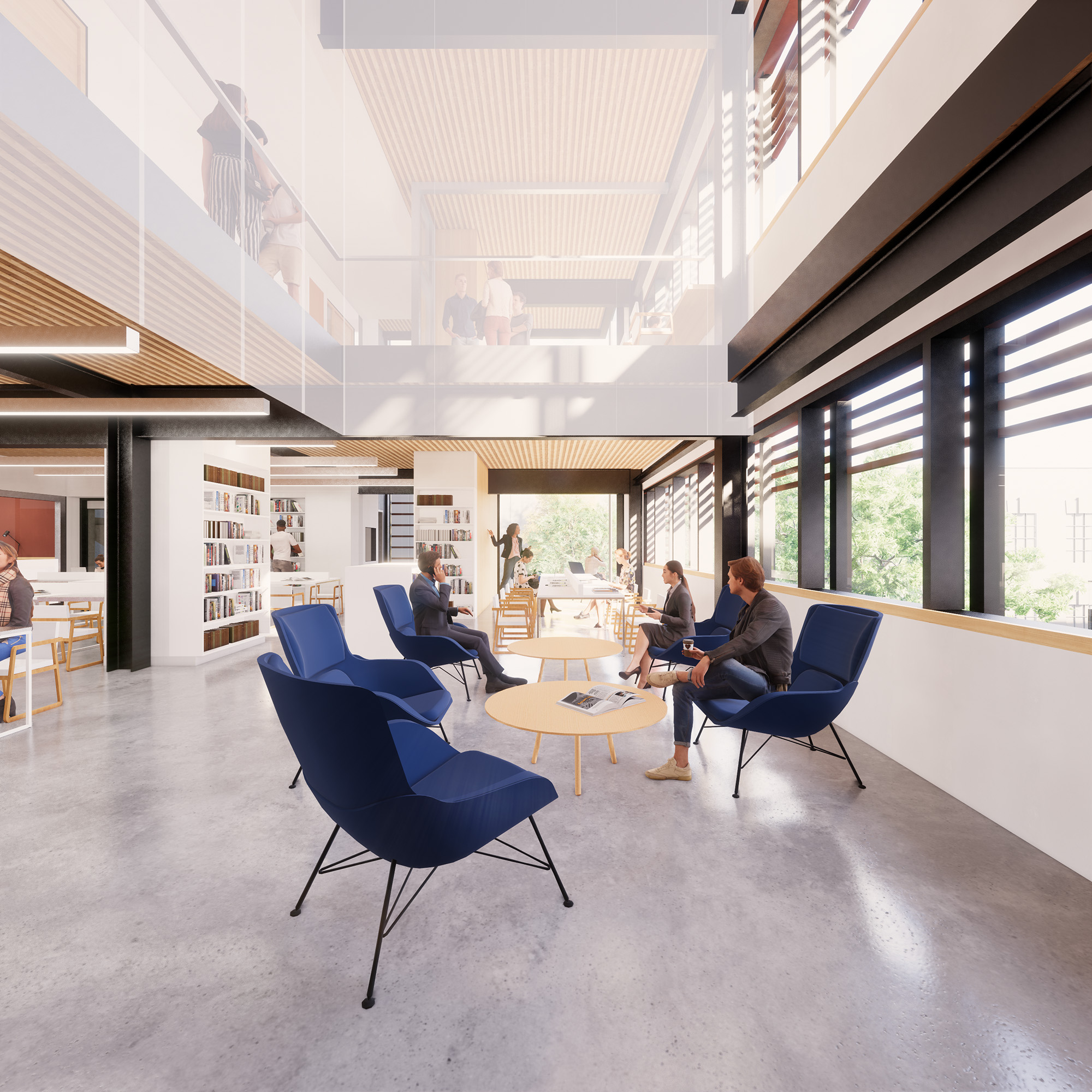
Transformation of the built environment
In one estimate, if we are to meet the 2050 net-zero targets, a facility must be rehabilitated every minute! While the technical aspects of doing so are complex, we have enough knowledge and tools to design and implement the decarbonization of our existing asset stock. The true challenges to scaling such rehabilitation are administrative/logistical and socio-economic ones.
Imagine if the operator of a small store, the owner of a single-family house or students in a high school want to assess means to decarbonize their facilities. They will face extensive hurdles to find and synthesize the web resources that can provide them with the right background knowledge of what to do: how to calculate the carbon footprint of their facility, what can be done to decarbonize their facilities? More importantly, if they decide to decarbonize their built asset, they will face even more extensive challenges in the logistics of designing and implementing the change: how to select rehabilitation approaches that can accommodate their functional needs, how to compare the life cycle costs of different decarbonization technologies, how to estimate the investment needs, how to find government programs that can support their work, how to estimate the return on investments for each rehabilitation option?
In short, if we are to realize the decarbonization objectives at scale, we must streamline the labyrinth of facility decarbonization logistics and address the socio-economic and business hurdles for doing so: patchy knowledge resources, low levels of digitization in the built asset industry, fragmented supply chains, and ad hoc processes.
Mission
The mission of the Center for Intelligent Buildings Digital Twinning (IBDT) at the University of Toronto is to reconfigure decision-making and redefine the occupant experience in the built asset industry through transformative use of data science, occupant engagement and process automation. A digital twin (DT) is not just a digital artifact (3D model). DT is a mentality and a continuous process of imagining and testing futures. In its essence, a DT is a cyber-replica of the physical, technical, social, and management aspects of a building’s life cycle. It is a sandbox where building stakeholders (e.g., architects, engineers, contractors, operators, and occupants) collaborate in generating options for the design, construction, and operation of buildings in the “virtual” world before implementing them in reality. Using the power of data analytics, DT enables stakeholders to co-generate scenarios and collectively study means to optimize building designs, project budgets and schedules, facility operational performance, and occupant wellbeing.
Vision
DT can be used for descriptive purposes (i.e., to determine what is true about a building), diagnostic purposes (i.e., to detect faults), predictive purposes (i.e., to determine what can occur in the future), and for prescriptive purposes (i.e., to imagine and study what should happen), which can include generative purpose (where the computer generate future prescriptive scenarios). Currently, most existing DT platforms are limited to descriptive or predictive purposes. Most DT platforms also focus on the physical aspects of buildings and do not consider business processes or occupant social determinants.
IBDT aims to realize prescriptive/generative DT and to do so through active empowerment of facility operators and users to lead the transformation and, beyond algorithms, through reengineering work processes and the adoption of progressive decision-making systems. The vision of IBDT is to use prescriptive/generative to realize interactively adaptive buildings (IAB). IABs monitor their own performance and profile their users’ needs and activities to suggest operational schemes that optimize performance and wellbeing; and then use algorithmic governance tool to execute these schemes.
Objectives
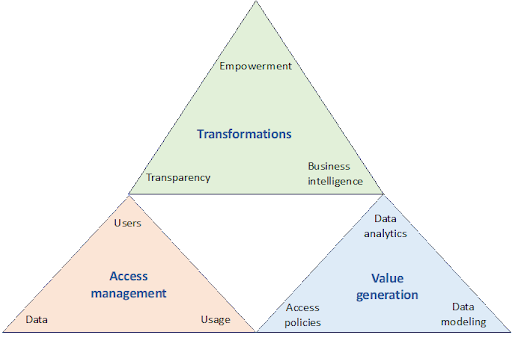
IBDT mandate spans three main themes: being a venue for data access and management; generating value through streamlining data models and advancing analytics; being an agent for organizational transformations.
Digitization and Access Management
IBDT aims to develop technical and administrative work process for creating digital representations of physical buildings; and, more importantly, embed this data into computational platforms to simulate, anticipate, and design real-world operational schemes for buildings. In other words, this process of digitization consists of bringing what is “real” into the digital world and – subsequently – extracting the insights obtained from the “digital twin” to enhance the actual (i.e., real-world) performance of the built environment.
In order to achieve this digitization of the built environment, a digital twin leverages a variety of data types, including IoT data, functional data, management data, and user input. In addition, a DT may also use several models to facilitate physical and functional digitization – examples of these models include a Building Information Model (BIM), a predictive model for hardware failure (increasingly provided by BAS), or even an energy simulation model.
To study and showcase this process of digitization, the IBDT will create a portal for campus buildings data. Operators and occupants will be able to access both structured and unstructured facility data, including historical, real-time, and simulated-future data as well as data generated by building operators and users.
Along with capturing and sharing data, IBDT will investigate how this data will be accessed, how it can be understood (i.e., what tools can be used to better communicate data), and most importantly, how it will be used to generate valuable insights for organizations.
To this end, the objective of the IBDT is not only to provide adequate data access (i.e., by means of a data portal) but also to establish an appropriate data governance strategy capable of outlining which policies and tools will be used for advancing the role of data in organizational decision making. Activities that are part of this objective include tailoring systems for a rational collection of data, ensuring reliable data quality capture, and promoting transparency in terms of data usage and sharing.
Virtualization and Business Intelligence
When people think about a digital twin, they often tend to focus solely on the digitization aspect (transferring physical components into the digital realm). However, one of the objectives of the IBDT is to go beyond digitization and towards virtualization, which is essentially futurizes the physical, cyber, and social aspects of the built environment through an integrated process for generating scenarios: what can be done? How can a facility be run? How can we imagine different futures?
IBDT places equal importance to modeling administrative and business processes, capturing the profiles and needs of building users. This is because, ultimately, our goal is to identify opportunities to increase the operational efficiency, sustainability and overall wellbeing provided by a building.
To achieve this virtualization of the buildings at UofT, the IBDT will promote the transformation of data analytics into business intelligence. The goal is to integrate analytics with enhanced data visualizations and purposeful business process re-engineering to generate insights and tools to guide operational planning, reconfigure decision-making processes, and support an organization’s transition towards an algorithmic governance of buildings (i.e., by means of automation).
In general, the insights obtained from the UofT digital twin will showcase how digital twin technology is capable of providing decision-makers with: (1) descriptive and diagnostic analytics to monitor real-world conditions, (2) predictive analytics that can help them prepare for emergencies and optimize resource usage, and (3) prescriptive analytics that can help them re-imagine and study alternative operational schemes.
Empowerment and Organizational Transformation
Overall, the main objective of the IBDT is to promote a fundamental change in the operations, management, and decision-making of buildings within the University of Toronto Campus (and the Canadian built asset industry, in general). To achieve this, the IBDT will develop and examine organizational decision-making schemes to empower building stakeholders and allow them to generate knowledge to create new horizons in the management of the built environment.
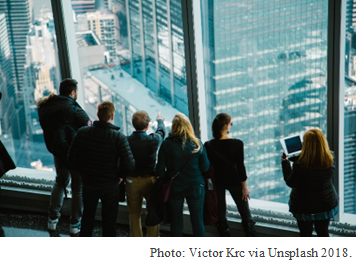
In this regard, the objective of the IBDT is to help building stakeholders become leaders of innovation by promoting a new level of engagement that goes beyond simply receiving facility information and selecting decision options towards empowering occupants and operators to become the creators new solutions that advance not only building operations but also the wellbeing of its users.
As a whole, this objective works towards promoting the concept of “Citizen Science” in which members of the general public (supported by researchers and technical professionals) contribute to the undertaking of scientific work ultimately to achieve a larger benefit for communities. Promoting Citizen Science is essential for the adequate planning, design, and development of the knowledge society and the smart city.
| Research Team | |||
|---|---|---|---|
Dr. Tamer El-Diraby IBDT Director |
|||
Soroush Sobhkhiz PhD Candidate |
Anthony Ortiz BIM & Virtualization Coordinator |
||
Yusong (Bill) Tang Project Manager, PhD Candidate |
Theohar Konomi Chief Software Architect |
||
Amirhossein Babaei Ravandi PhD Candidate |
|||
| Partners & Collaborators | |||
|---|---|---|---|
Facilities & Services Department University of Toronto |
Ministry of Infrastructure Ontario |
||
University Planning, Design & Construction University of Toronto |
Toronto and Region Conservation Authority |
||
Sustainability Office University of Toronto |
|||